Saturday, February 24, 2024

Large renal cortical cyst, sonography

* Ultrasound:
    * Anechoic (fluid-filled) lesion with well-defined margins and a thin wall.
    * Posterior acoustic enhancement (increased echogenicity behind the cyst).
    * Few, thin septa may be present (normal in up to 5% of simple cysts). In this case, no septae seen. 
    * No internal echoes or echogenic debris (suggestive of complexity).


* **Color Doppler:
    * Avascular (no blood flow within the cyst).

For more on this topic visit:


**Prognosis:

* Simple renal cysts, like the one described here, are generally benign and have an excellent prognosis.
* The size of the cyst itself does not necessarily indicate malignancy.
* Long-term follow-up is usually not required unless the cyst grows significantly or causes symptoms.

**Management:**

* Most simple renal cysts do not require treatment.
* Observation is typically the recommended approach.
* If the cyst causes pain, infection, or other complications, intervention might be considered.
    * Options include aspiration (needle drainage), sclerotherapy (injection of a substance to shrink the cyst), or surgery in rare cases.

Remember, this information is for educational purposes only and should not be interpreted as medical advice. 

Sunday, February 18, 2024

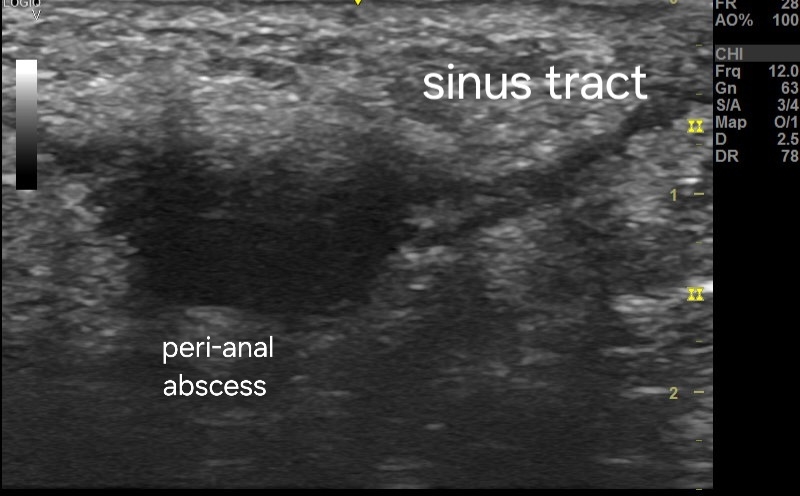
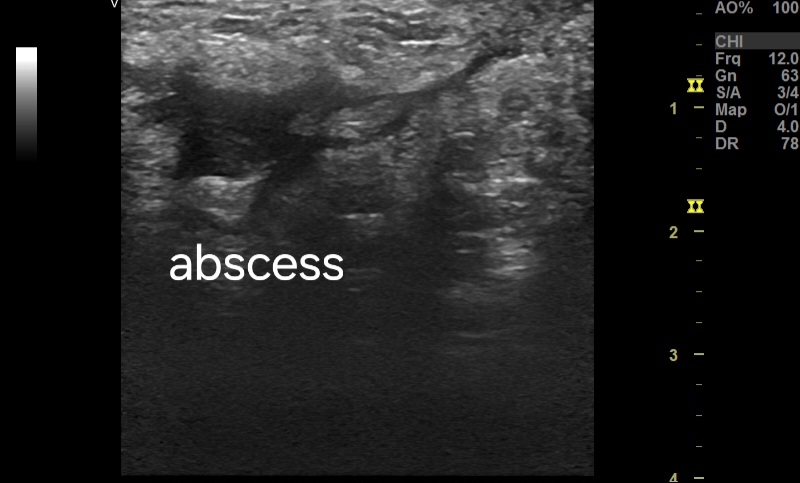
Peri-Anal Abscess with Sinus Tract, ultrasound imaging

## Ultrasound Imaging Findings of Peri-Anal Abscess with Sinus Tract:

**Ultrasound features:

* Size: 1.5 cm, typically irregular and oval in shape.
* Margin: Hyperechoic rim surrounding a hypoechoic center.
* Internal echoes: Hypoechoic due to fluid and debris within the abscess.
* Sinus tract: Appears as a hypoechoic tract extending from the abscess, potentially connecting to the skin surface. 
*Doppler flow: Absent within the abscess itself, but is present around the margins.

Images:
For more visit:


**Prognosis:

* Generally good with early diagnosis and prompt treatment.
* Delayed treatment can lead to complications like extension of infection, fistula formation, and cellulitis.
* Recurrence rates can be high, especially in patients with underlying inflammatory bowel disease.

**Management:

* *Incision and drainage: The mainstay of treatment, usually guided by ultrasound for accuracy.
*Antibiotic therapy: Broad-spectrum antibiotics to cover potential skin and gut flora.
* Pain management: Medications and Sitz baths for pain relief.
* Dietary modifications: High-fiber diet to promote stool regularity and reduce straining.
* Fistula management: Additional procedures like fistulotomy or fibrin sealant injection may be needed for complex fistulas.

**Additional notes:

* Ultrasound is a readily available, non-invasive, and relatively inexpensive imaging modality for peri-anal abscesses.
* In some cases, MRI may be needed for further evaluation, especially if the abscess is complex or there is suspicion of Crohn's disease involvement.
* Prognosis and management depend on individual factors like abscess size, presence of fistula, and underlying medical conditions.